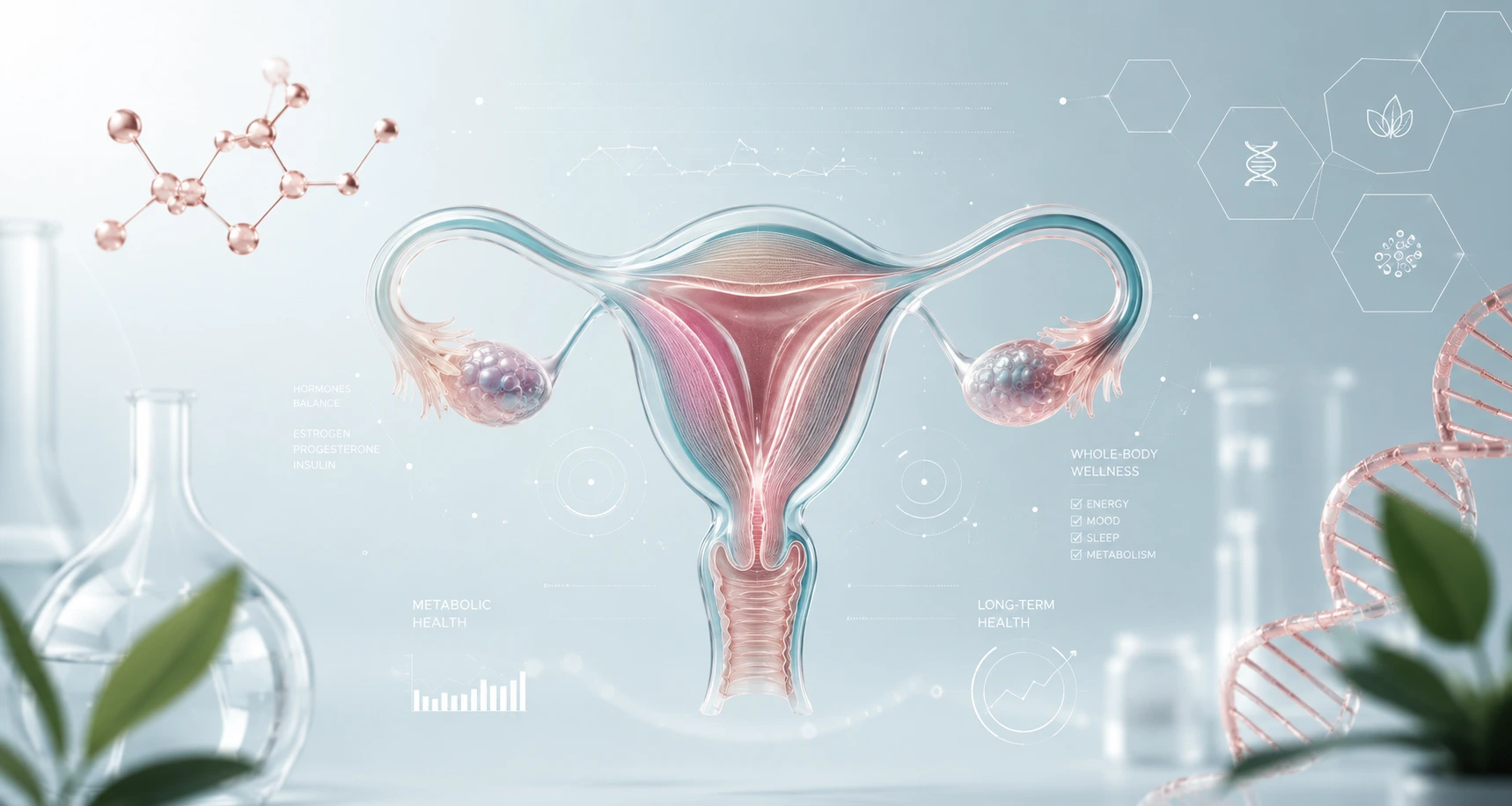

Key Takeaways
- Hormone optimization works best when personalized treatment, consistency, healthy habits, and ongoing provider support work together.
- Treatment plans often evolve over time as providers learn how your body responds and refine your care.
- Taking medication as prescribed and completing follow-up appointments helps ensure your treatment remains aligned with your symptoms and goals.
- Nutrition, hydration, movement, sleep, and stress management can all influence how you feel and how your body responds to treatment.
- The most meaningful improvements often happen gradually, with small changes building into significant long-term results.
Women often begin treatment looking forward to relief from symptoms such as hot flashes, poor sleep, low energy, weight gain, and mood changes. Along the way, it's normal to have questions. How long will it take to work? Am I doing everything correctly? Why has my provider adjusted my treatment plan? Should I be feeling better by now?
These are completely normal concerns.
The truth is that hormone optimization is rarely a straight line. Your body needs time to respond to treatment, and your provider needs time to understand how you respond. Along the way, adjustments may be recommended, questions may arise, and progress may not always happen exactly as expected.
None of that means treatment is not working.
In many cases, the most meaningful improvements happen gradually, with small changes building into significant long-term results. Understanding that from the beginning can make the process far less frustrating and help you get the most from your treatment.
What Successful Long-Term Optimization Looks Like
The women who achieve the best long-term results are not usually those who make the most dramatic changes. More often, they are the women who stay consistent, remain engaged with their provider, and focus on steady progress over time.
Successful hormone optimization is often built on a few key habits:
- Taking medication as prescribed
- Completing follow-up appointments
- Communicating openly with your provider
- Supporting treatment with healthy lifestyle habits
- Staying patient when progress feels gradual
Together, these habits help create the foundation for lasting improvements in energy, confidence, resilience, wellbeing, and overall quality of life.

Hormone Optimization Is a Personalized Process
One of the biggest misconceptions about hormone therapy is that there is a single approach that works for everyone.
There isn't.
Every woman arrives at treatment with a different combination of symptoms, health history, lifestyle factors, hormone levels, and goals. What works exceptionally well for one person may not be the right fit for someone else.
That is why hormone optimization is designed to be personalized.
As treatment progresses, your provider learns more about how your body responds and what changes may help improve your results. Sometimes that means adjusting a dose. Sometimes it means refining part of the plan. Occasionally it means introducing additional support.
These refinements are not a sign that something is wrong. They are a normal part of creating a treatment plan that truly fits your needs.
At Fem Excel, the goal is not simply to prescribe treatment. The goal is to continually optimize your care so it remains aligned with your symptoms, your goals, and your long-term health.
The most successful treatment plans are rarely the result of medication alone. They are the result of an ongoing partnership between you and your provider. Your provider brings clinical expertise and guidance.
You bring feedback about how you're feeling, what is improving, and where you may still be struggling. Together, those insights help shape a treatment plan that continues to evolve as your needs change.
Why Consistency Matters
If there is one factor that influences long-term success more than any other, it is consistency.
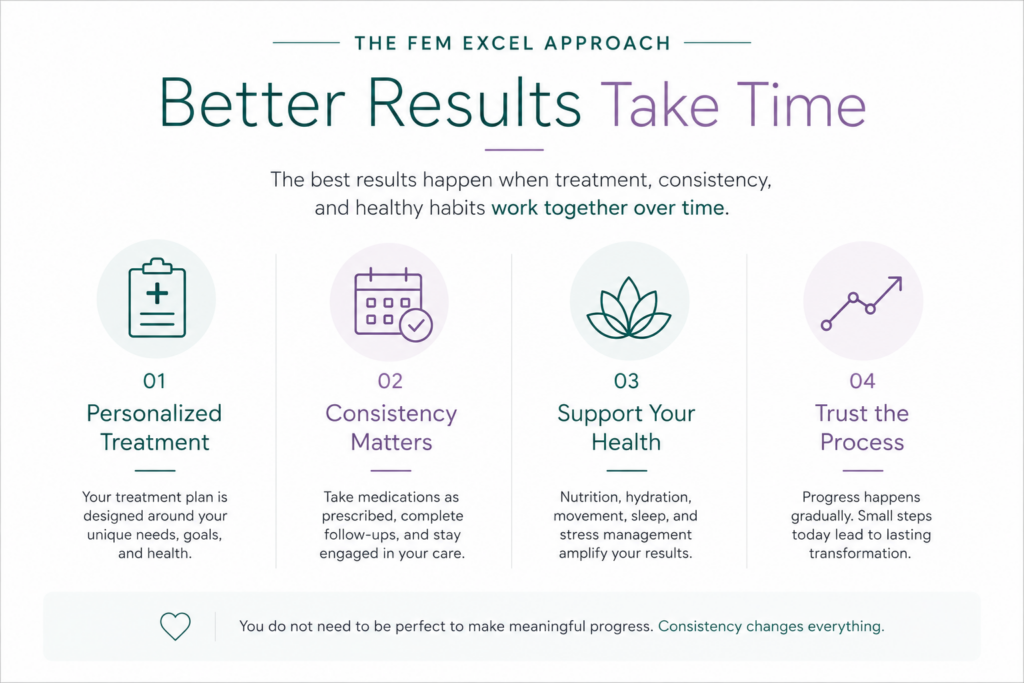
Hormone therapy works best when treatment is followed as prescribed and given enough time to work. Frequently missing doses, stopping and restarting treatment, or skipping follow-ups can make it more difficult to accurately evaluate progress and determine what adjustments may be needed.
Consistency extends beyond medication.
Getting the best results often comes down to:
- Taking medication as prescribed
- Completing follow-up appointments
- Communicating openly with your provider
- Completing requested lab work
- Staying engaged with your treatment plan
These habits help your provider understand how you're responding to treatment and ensure your care remains personalized and effective.
One of the most common reasons women become discouraged is because they expect progress to be obvious.
More often, progress appears gradually. Life starts feeling easier. Your energy becomes more reliable. Sleep improves. Daily responsibilities feel less draining. Stress feels more manageable.
These changes can seem subtle at first, but they are often the earliest signs that treatment is moving in the right direction. Given enough time and consistency, those smaller improvements often develop into meaningful changes in how you feel and function every day.
Lifestyle Habits That Support Better Results
Hormone therapy is designed to work alongside healthy habits, not replace them.
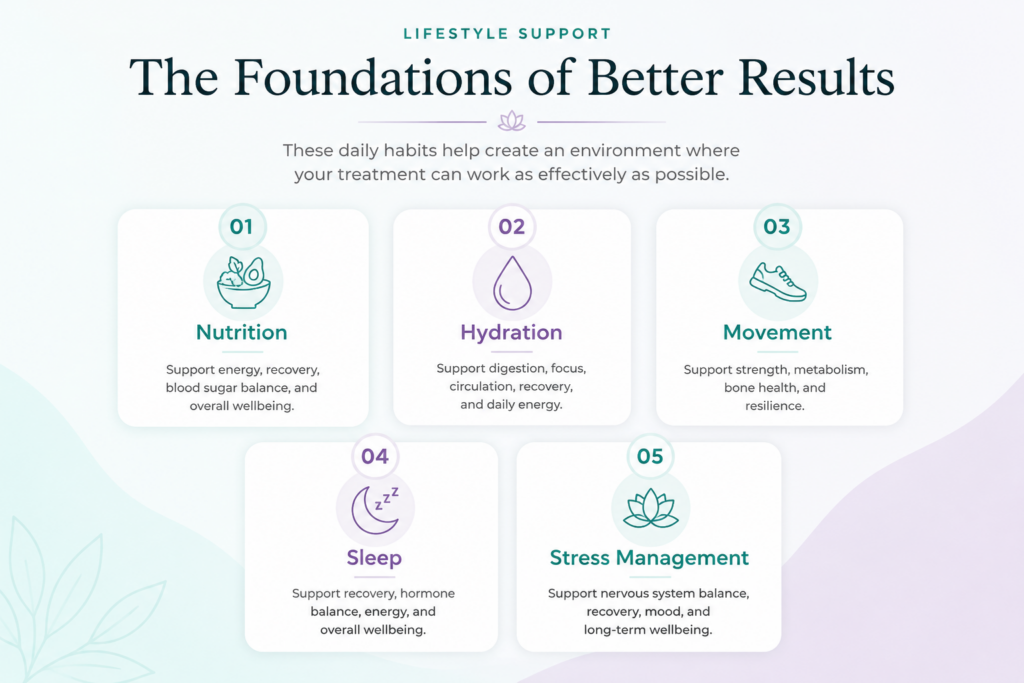
While treatment can help address underlying hormonal imbalances, the choices you make each day can influence how you feel and how your body responds. The encouraging news is that supporting your results does not require perfection. In most cases, simple and sustainable habits are far more effective than extreme approaches.
These habits help create an environment where your treatment can work as effectively as possible.
Prioritize Proper Nutrition
Nutrition plays an important role in energy levels, metabolism, recovery, blood sugar regulation, and overall wellbeing.
Many women feel pressure to follow restrictive diets or constantly search for the perfect eating plan. In reality, consistency and proper nourishment are often far more valuable than chasing perfection.
Focusing on protein-rich meals, whole foods, fiber, and balanced nutrition can help support your body's needs throughout treatment. This becomes particularly important for women using GLP-1 medications, where appetite changes may make it more challenging to consume adequate nutrients.
Rather than focusing on what you should eliminate, focus on giving your body what it needs to perform at its best.
Stay Hydrated
Hydration affects more than most people realize.
Energy levels, digestion, circulation, recovery, and overall wellbeing can all be influenced by hydration status. Even mild dehydration can contribute to fatigue, headaches, and reduced concentration.
For women using GLP-1 medications, maintaining adequate fluid intake is especially important.
Something as simple as drinking enough water throughout the day can have a meaningful impact on how you feel.
Make Movement Part of Your Routine
Exercise supports far more than weight management.
Regular movement can help support metabolic health, cardiovascular health, insulin sensitivity, muscle maintenance, bone health, and healthy aging.
Strength training deserves special attention because maintaining muscle becomes increasingly important as women age. Walking, resistance training, recreational activities, and other forms of movement can all contribute to better health.
The most effective exercise plan is rarely the most intense. It is the one that fits your life and can be maintained consistently.
Protect Your Sleep
Sleep is one of the most important foundations of good health.
When sleep is disrupted, energy, mood, recovery, appetite regulation, and overall wellbeing can all suffer. Even the most personalized treatment plan will struggle to deliver optimal results if sleep is consistently poor.
Creating a regular sleep schedule, limiting distractions before bed, and prioritizing adequate rest can help support both your treatment and your overall health.
Manage Stress Where Possible
Stress is an unavoidable part of life, but chronic stress can affect many of the systems involved in hormone balance and recovery.
Managing stress does not mean eliminating every challenge from your life. It means creating opportunities for your body and mind to recover.
Helpful stress-supportive habits include:
- Walking outdoors
- Spending time in sunlight
- Practicing mindfulness
- Setting healthy boundaries
- Making time for relaxation
- Prioritizing recovery
Small improvements in stress management often produce benefits that reach far beyond stress itself.
When Will I Start Noticing Changes?
This is one of the most common questions women ask when beginning treatment.
There is no single timeline that applies to everyone.
Progress depends on many factors, including your symptoms, health history, treatment plan, lifestyle habits, and how your body responds to therapy.
For some women, improvements in sleep, mood, or energy become noticeable relatively early. For others, changes emerge more gradually as treatment is refined over time.
What matters most is not comparing your experience to someone else's. The focus should remain on your own progress and the overall direction you are moving.
If you would like a more detailed overview of what to expect throughout treatment, we recommend reading our Hormone Therapy Timeline Guide.
Why Ongoing Support Matters
Follow-ups are not a sign that treatment isn't working. They are one of the reasons personalized care works so well.
They give your provider an opportunity to review your progress, answer questions, and make adjustments when appropriate. As your treatment journey continues, these conversations help ensure your plan remains aligned with your symptoms, goals, and overall health.
At Fem Excel, care does not stop once treatment begins. Ongoing provider support helps ensure your plan continues to reflect your symptoms, goals, and progress over time.
Hormone optimization is most effective when treatment, communication, and provider guidance work together. That ongoing partnership helps ensure you continue moving toward your health goals with confidence.
Progress Matters More Than Perfection
Many women begin treatment hoping to feel better as quickly as possible. That is completely understandable.
The women who experience the greatest long-term success are usually not the women who pursue perfection. They are the women who remain patient, stay engaged, communicate with their provider, and continue moving forward even when progress feels gradual.
There will be periods when everything feels easier and periods when progress seems slower. That is normal.
What matters is continuing to build momentum.
At Fem Excel, our goal is not simply to provide treatment. It is to provide the guidance, support, education, and personalized care needed to help you achieve meaningful and lasting improvements in your health and quality of life.
Stay consistent. Stay connected. Keep moving forward.
Meaningful change rarely happens overnight, but small improvements have a remarkable way of becoming life-changing results when given enough time to grow.
Hormone insights you can trust.
Related links
References
- Stuenkel CA, Davis SR, Gompel A, et al. Treatment of symptoms of the menopause: an Endocrine Society clinical practice guideline. J Clin Endocrinol Metab. 2022;107(4):984-1002. doi:10.1210/clinem/dgab904
PubMed: https://pubmed.ncbi.nlm.nih.gov/34980933/
DOI: https://doi.org/10.1210/clinem/dgab904 - Sherwin BB. Estrogen and cognitive functioning in women. Endocr Rev. 2003;24(2):133-151. doi:10.1210/er.2001-0016
PubMed: https://pubmed.ncbi.nlm.nih.gov/12700178/
DOI: https://doi.org/10.1210/er.2001-0016 - Canonico M, Oger E, Plu-Bureau G, et al. Hormone therapy and venous thromboembolism among postmenopausal women. BMJ. 2007;335(7613):933. doi:10.1136/bmj.39367.633380.55
PubMed: https://pubmed.ncbi.nlm.nih.gov/17916596/
DOI: https://doi.org/10.1136/bmj.39367.633380.55 - Manson JE, Chlebowski RT, Stefanick ML, et al. Menopausal hormone therapy and health outcomes during the intervention and extended poststopping phases of the Women's Health Initiative randomized trials. JAMA. 2013;310(13):1353-1368. doi:10.1001/jama.2013.278040
PubMed: https://pubmed.ncbi.nlm.nih.gov/24084921/
DOI: https://doi.org/10.1001/jama.2013.278040 - Hodis HN, Mack WJ, Henderson VW, et al. Vascular effects of early versus late postmenopausal treatment with estradiol. N Engl J Med. 2016;374(13):1221-1231. doi:10.1056/NEJMoa1505241
PubMed: https://pubmed.ncbi.nlm.nih.gov/27028912/
DOI: https://doi.org/10.1056/NEJMoa1505241 - Santoro N, Epperson CN, Mathews SB. Menopausal symptoms and their management. Endocrinol Metab Clin North Am. 2015;44(3):497-515. doi:10.1016/j.ecl.2015.05.001
PubMed: https://pubmed.ncbi.nlm.nih.gov/26316239/
DOI: https://doi.org/10.1016/j.ecl.2015.05.001 - Simon JA, Goldstein I, Kim NN, et al. The role of androgens in the treatment of hypoactive sexual desire disorder in women. Menopause. 2020;27(3):282-289. doi:10.1097/GME.0000000000001468
PubMed: https://pubmed.ncbi.nlm.nih.gov/31876512/
DOI: https://doi.org/10.1097/GME.0000000000001468 - Davis SR, Baber R, Panay N, et al. Global consensus position statement on the use of testosterone therapy for women. J Clin Endocrinol Metab. 2019;104(10):4660-4666. doi:10.1210/jc.2019-01603
PubMed: https://pubmed.ncbi.nlm.nih.gov/31435662/
DOI: https://doi.org/10.1210/jc.2019-01603 - Glaser R, Dimitrakakis C. Testosterone therapy in women: myths and misconceptions. Maturitas. 2013;74(3):230-234. doi:10.1016/j.maturitas.2012.11.004
PubMed: https://pubmed.ncbi.nlm.nih.gov/23265373/
DOI: https://doi.org/10.1016/j.maturitas.2012.11.004 - Braunstein GD, Sundwall DA, Katz M, et al. Safety and efficacy of a testosterone patch for the treatment of hypoactive sexual desire disorder in surgically menopausal women. Arch Intern Med. 2005;165(14):1582-1589. doi:10.1001/archinte.165.14.1582
PubMed: https://pubmed.ncbi.nlm.nih.gov/16043674/
DOI: https://doi.org/10.1001/archinte.165.14.1582 - Elraiyah T, Sonbol MB, Wang Z, et al. Clinical review: the benefits and harms of systemic testosterone therapy in postmenopausal women. J Clin Endocrinol Metab. 2014;99(10):3543-3550. doi:10.1210/jc.2014-2262
PubMed: https://pubmed.ncbi.nlm.nih.gov/25062463/
DOI: https://doi.org/10.1210/jc.2014-2262 - Schierbeck LL, Rejnmark L, Tofteng CL, et al. Effect of hormone replacement therapy on cardiovascular events in recently postmenopausal women. BMJ. 2012;345:e6409. doi:10.1136/bmj.e6409
PubMed: https://pubmed.ncbi.nlm.nih.gov/23048011/
DOI: https://doi.org/10.1136/bmj.e6409 - Mikkola TS, Tuomikoski P, Lyytinen H, et al. Increased cardiovascular mortality risk in women discontinuing postmenopausal hormone therapy. Menopause. 2015;22(9):976-980. doi:10.1097/GME.0000000000000458PubMed:https://pubmed.ncbi.nlm.nih.gov/25756697/DOI: https://doi.org/10.1097/GME.0000000000000458